


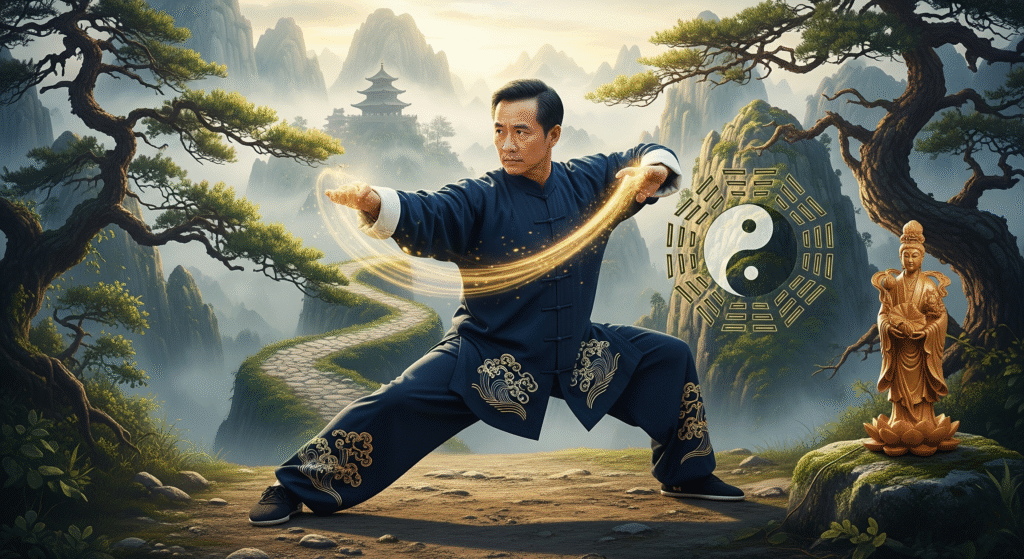
Kung Fu, with its rich history and philosophy, has been revered for centuries, not only as a form of self-defense but also as a means of spiritual enlightenment. Among the many styles and traditions in Kung Fu, one that stands out is the teaching derived from the legendary Eight Immortals of Taoist mythology. The “8 Immortals Kung Fu Lessons” embody more than just physical movements—they encapsulate profound teachings on life, balance, and inner peace. In this article, we explore the essence of these lessons, the techniques involved, and the deeper meanings behind each step.
Introduction to the 8 Immortals Kung Fu Lessons
The Eight Immortals (Ba Xian) are mythological figures in Taoist tradition, known for their mastery over life and death. These figures—each embodying different virtues—are often depicted in Chinese art, literature, and martial arts as symbols of strength, wisdom, and spiritual attainment. The 8 Immortals Kung Fu Lessons are based on the qualities of these figures and offer a holistic approach to martial arts.
These lessons go beyond mere physical training. They are designed to improve one’s health, mental clarity, and connection to the Tao (the way of the universe). Whether you’re looking to enhance your Kung Fu practice or embark on a journey of self-discovery, the lessons of the 8 Immortals will provide you with valuable insights.
1. The Lesson of Zhang Guolao: The Importance of Flexibility and Adaptability
Zhang Guolao, one of the 8 Immortals, is often depicted riding a donkey backward, symbolizing his unconventional and adaptable nature. His lesson teaches practitioners the importance of flexibility—both physically and mentally.
In Kung Fu, flexibility isn’t just about being able to stretch your body. It’s about being adaptable in your approach to problems, whether on the training mat or in life. The ability to adjust your techniques to the situation at hand is crucial for success. This lesson encourages practitioners to keep an open mind and remain flexible in their thinking and actions.
Practically, this lesson can be integrated into Kung Fu by focusing on fluid movements, rather than rigid stances. The body must move freely to respond to attacks or shifts in the environment. Zhang Guolao’s lesson emphasizes that true strength comes from knowing when to flow with the situation and when to stand firm.
2. The Lesson of Li Tieguai: Resilience and Overcoming Adversity
Li Tieguai is often shown carrying a gourd and representing the virtue of resilience. Despite facing many challenges, including a loss of his physical form, Li Tieguai’s lesson focuses on enduring hardship with grace.
In martial arts, as in life, challenges are inevitable. Li Tieguai’s lesson encourages us to persist through tough times, using resilience to rise after every fall. This lesson is fundamental in Kung Fu, where practitioners often face physical limits. It teaches the importance of perseverance and developing an indomitable spirit.
This lesson is about cultivating a mindset that doesn’t break under pressure. In practice, this can be achieved through rigorous training and learning to deal with fatigue, injury, or failure. Li Tieguai’s approach to martial arts emphasizes that resilience isn’t just about enduring, but also about growing stronger through adversity.
3. The Lesson of Lü Dongbin: The Power of Wisdom and Inner Peace
Lü Dongbin, known for his swordsmanship and profound wisdom, represents the idea of mastering both external and internal aspects of martial arts. His lesson centers around the power of knowledge, balance, and inner peace.
In Kung Fu, physical strength is only half the equation. To be truly effective, one must also develop mental clarity and focus. Lü Dongbin’s lesson teaches the importance of cultivating inner peace, as it leads to better control of the body and mind. When the mind is clear, the body can execute techniques with precision and efficiency.
This lesson is critical for Kung Fu practitioners who seek harmony in their movements and thoughts. By incorporating meditation and mindfulness into your training, you can achieve a deeper connection to your movements, transforming your Kung Fu practice into a form of moving meditation.
4. The Lesson of He Xiangu: Cultivating Health and Vitality
He Xiangu, the only female immortal among the Eight Immortals, symbolizes the importance of health and vitality. Often shown with a lotus flower, He Xiangu’s lesson teaches us that true strength comes from nurturing the body and mind.
In Kung Fu, physical health is the foundation upon which all techniques and abilities rest. He Xiangu’s teachings stress that without good health, even the most skilled martial artist will struggle to reach their full potential. This lesson encourages practitioners to focus on maintaining physical fitness, a balanced diet, and regular rest, all of which support longevity and energy.
By incorporating exercises like qigong or Tai Chi, which emphasize breathwork and gentle movement, you can increase your vitality and maintain a balanced, healthy body. He Xiangu’s approach to Kung Fu teaches us that vitality is key to longevity and success in both martial arts and life.
5. The Lesson of Zhang Xian: Understanding the Cycles of Nature
Zhang Xian represents the connection between human beings and the natural world. His teachings emphasize understanding the cycles of nature and aligning oneself with the rhythms of life.
This lesson is about learning to read the natural flow of energy—both in the environment and within oneself. In Kung Fu, this means being attuned to the energy of your surroundings, the timing of movements, and the cycles of your training regimen. Understanding when to push and when to rest is crucial for maintaining balance and achieving success.
Zhang Xian’s lesson also teaches the importance of patience. Just as the seasons change in cycles, mastery in Kung Fu requires time and consistent effort. By learning to flow with nature’s rhythms, practitioners can achieve a deeper level of understanding and skill.
6. The Lesson of Han Zhongli: The Art of Self-Discipline
Han Zhongli, often shown with a peach of immortality, is a symbol of discipline and self-control. His lesson revolves around the idea that true power comes from the mastery of self.
In Kung Fu, discipline is key to mastering any technique. Han Zhongli’s lesson teaches that one must first control the self before attempting to control the world around them. This lesson encourages martial artists to approach their training with diligence and focus, creating habits that cultivate discipline both on and off the mat.
To embrace this lesson, practitioners should set clear goals, follow a structured training regimen, and remain committed to their practice, no matter the obstacles they face.
7. The Lesson of Cao Guojiu: The Value of Purity and Humility
Cao Guojiu, often portrayed as a figure of elegance and humility, teaches the value of purity and humility in both life and martial arts. His lesson emphasizes the importance of acting with integrity and remaining grounded.
In Kung Fu, humility is a vital trait. Cao Guojiu’s lesson teaches that no matter how skilled a practitioner becomes, they must never let pride cloud their judgment. Martial arts is about constant improvement, and humility allows one to learn from others, regardless of rank or ability.
This lesson encourages martial artists to remain humble, not only in their interactions with others but also in their approach to learning and training. Humility allows practitioners to stay open to feedback and growth, both personally and professionally.
8. The Lesson of Lan Caihe: Embracing the Balance Between Work and Play
Lan Caihe is known for their carefree attitude and ability to live in the moment. Lan Caihe’s lesson teaches the importance of balancing hard work with moments of joy and leisure.
In Kung Fu, balance is everything. Too much focus on training can lead to burnout, while too much relaxation can hinder progress. Lan Caihe’s lesson encourages martial artists to maintain a balanced lifestyle, where work and play coexist harmoniously.
This lesson reminds practitioners to take time for rest, recovery, and enjoying life outside of training. By embracing this balance, martial artists can stay motivated, healthy, and focused throughout their journey.
Conclusion: The Timeless Wisdom of the 8 Immortals Kung Fu Lessons
The 8 Immortals Kung Fu Lessons offer a holistic approach to martial arts, blending physical training with deep spiritual and philosophical teachings. By incorporating the wisdom of the Eight Immortals into your practice, you can achieve greater strength, resilience, and clarity, both on and off the mat.
These lessons remind us that Kung Fu is not just about mastering combat techniques but also about cultivating inner peace, discipline, and humility. Whether you’re a seasoned martial artist or a beginner, the teachings of the 8 Immortals will guide you toward becoming not just a better fighter, but a better person.
By embracing the 8 Immortals Kung Fu Lessons, you embark on a journey that leads to both personal and martial growth. The principles of adaptability, resilience, wisdom, health, discipline, humility, and balance are as relevant today as they were centuries ago, ensuring that the legacy of the Eight Immortals continues to inspire future generations of martial artists.
